
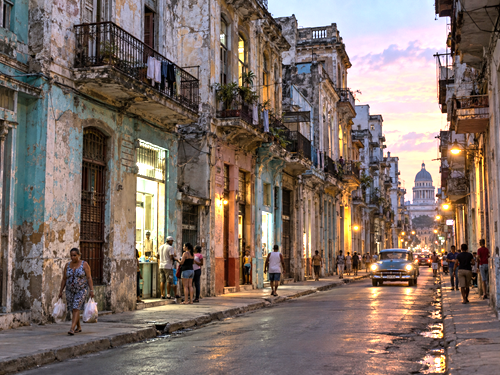
A contrast between quality of life in the 1950s, the deterioration after 1959, and the privileges of the nomenklatura.
THE HUMAN COST OF AN ETERNAL DICTATORSHIP
Lights from the past and shadows of the present: A comparative analysis of quality of life in Cuba (1950–1959 vs. the current tyrannical regime)
By Dr. Nelson Jorge Mosco Castellano
To understand the magnitude of the social and humanitarian crisis Cuba is currently experiencing, it is essential to undertake an exercise in historical comparison.
This analysis contrasts the island’s socioeconomic reality during the decade prior to 1959—frequently distorted by ideological narratives—with documented data on its subsequent decline, while also highlighting the profound gap separating the hardships of ordinary citizens from the privileges of the ruling elite.
Quality of life in Cuba between 1950 and 1959
Cuba in the 1950s presented a complex reality, characterized by profound regional contrasts, especially between Havana and rural areas, but one that overall placed the country at the forefront of Latin America in multiple indicators of economic and social development.
Far from being an impoverished country or merely a banana republic, Cuba occupied a privileged position in the Western Hemisphere.
Its gross domestic product (GDP) per capita ranked among the highest in Latin America, surpassing countries such as Japan or several postwar European states in terms of relative income.
The rate of automobile ownership, per capita consumption of meat and protein, telephone penetration, and access to household appliances in urban homes placed Cuban society in a position of modernity comparable to developed nations of the period. The capital, Havana, was a vibrant financial and cultural center.
Although significant shortcomings existed among the rural population in the eastern part of the country, the nation recorded one of the highest literacy rates in Latin America, close to 75–80%, and possessed notable medical infrastructure, with a high density of physicians per capita and advanced hospitals financed both by the State and by mutual-aid societies and charitable associations established by immigrant communities.
The fundamental problem of Cuba in the 1950s was not absolute material scarcity, but institutional instability, acute political polarization, and government corruption unleashed after coups d’état and the breakdown of constitutional order, factors that fractured democratic coexistence and opened the way to the revolutionary cycle.
The contrast: Human costs and current reality in light of international reports
What promised to be a correction of the imbalances of the republican era evolved, after more than six decades of centralized state monopoly, into a generalized collapse of living conditions.
International human rights organizations and independent documentation centers have quantified this deterioration:
Organizations such as Human Rights Watch and Amnesty International have persistently documented the elimination of civil liberties, the systematic use of courts subordinated to political power, and the criminalization of peaceful protest, intensified after the massive demonstrations of July 11, 2021.
At the same time, historical memory projects such as Cuba Archive have recorded more than 9,400 deaths and disappearances directly attributable to state repression, including firing-squad executions, extrajudicial killings, deaths caused by negligence in custody, and fatalities during desperate attempts to flee the country.
Specialized platforms such as Prisoners Defenders and Cubalex consistently report figures exceeding one thousand political prisoners held simultaneously and subjected to inhumane conditions of detention.
This climate of suffocation has driven the largest exodus in the island’s republican history, emptying Cuba of more than 10% of its population in only a few years and irreparably fracturing Cuban families across a global diaspora.
Basic economic and social rights—rhetorically glorified by the mafioso system that controls power—are today in ruins.
Chronic food shortages, the lack of essential medicines, the absolute obsolescence of public healthcare infrastructure, and prolonged daily power outages describe a society reduced to precarious survival.
The nomenklatura divide: The distance between the people and the dictators
While the overwhelming majority of the Cuban population suffers the consequences of a collapsed economy, living in deteriorating housing, standing in endless lines to obtain rationed products, and facing precarious public services, the governing elite, the so-called nomenklatura, and families connected to those in power enjoy a diametrically opposite standard of living.
Senior regime officials, their associates, and the military leadership that controls the State’s tourism and financial conglomerates live in exclusive mansions, previously confiscated, insulated from power cuts and the urban housing crisis.
They have access to exclusive stores operating in foreign currency and stocked with high-quality imported products, fleets of modern official vehicles, highly specialized medical care in private clinics inaccessible to ordinary citizens, and the ability to vacation or reside abroad without the severe migration restrictions that suffocate the general population.
The comparison between Cuba in the 1950s and the present reveals a tragic historical paradox.
A society that once ranked among the most dynamic and relatively prosperous in the Spanish-speaking Americas was subjected to a political model that destroyed its productive fabric and its freedoms.
Today, reports from some of the world’s most respected organizations confirm that the cost of that experiment is measured not only in economic ruins, but also in lives cut short, families torn apart by exile, and the painful contrast between an impoverished citizenry and a ruling caste that uses the machinery of the State for its own benefit.
There are articles by the Cuban writer Carlos Alberto Montaner that provide pathological references to the Cuban dictatorial regime and its treatment of its people for 75 years.
The essays, journalism, and testimonial writings of Cuban author and political analyst Carlos Alberto Montaner constitute one of the most lucid, incisive, and documented intellectual references for understanding the pathological nature of the Havana regime and its destructive impact on the social fabric over decades.
Through fundamental books such as “Journey to the Heart of Cuba,” “Guide to the Perfect Latin American Idiot” (co-authored), and hundreds of columns published in international media, Montaner dissected the mechanisms of totalitarian domination.
His writings provide essential insights into the treatment imposed on the Cuban people:
Absolute nationalization and the “great estate”
One of Montaner’s most incisive diagnoses was to define the Cuban system not as a modern state, but as a form of neofeudalism or “a great estate” in which the political leadership appropriated the totality of the means of subsistence.
Under this analytical framework, because everything belongs to the State—from the land to the most basic work tools—any attempt at private initiative or survival outside official control is classified as a serious crime.
Montaner illustrated this through the tragic paradox that slaughtering cattle to feed a hungry family could carry prison sentences under the Cuban penal code far harsher than those assigned to crimes against individuals, reflecting the dehumanization and contempt for individual life in comparison with the property of the political apparatus.
The engineering of social control and the suffocation of dissent
Montaner documented with psychological and sociological rigor how the regime structured a capillary surveillance system that penetrated citizens’ private lives through the Committees for the Defense of the Revolution (CDRs) and institutionalized informing.
In his essays, he exposed the citizen’s absolute legal defenselessness, in which rights enshrined on paper were nullified by ideological arbitrariness.
In his chronicles, he summarized the pathology of the system through a devastating formula: the structural impossibility of civic dissent in the face of the hyperregulation of intimate and social life, where changing one’s political position or challenging the party monopoly automatically amounted to civil death, exile, or imprisonment.
One of the deepest forms of damage inflicted on the Cuban nation has been the systematic destruction of its civil society and the systematic expulsion of talent.
The regime deliberately turned exile and the diaspora into an instrument of political control: by expelling or pushing beyond its borders the most critical, entrepreneurial, and productive minds, the dictatorship succeeded in dismantling internal opposition and maintaining an exhausted population focused exclusively on everyday survival and therefore incapable of organized rebellion.
The double standard and cynicism of the nomenklatura
In his analyses of the psychology of power in Cuba, Montaner dissected the moral abyss between the ruling elite and ordinary citizens.
While official discourse demanded permanent patriotic sacrifices and collective heroism—“homeland or death”—the governing class enjoyed feudal privileges and an opulent standard of living entirely divorced from generalized scarcity.
This structural hypocrisy was not an administrative failure, but the pathological core of a system sustained purely through police coercion and fear.
The writings of Carlos Alberto Montaner constitute a political and moral autopsy of island totalitarianism, explaining with surgical precision how a vibrant and modern society was reduced to a prolonged humanitarian crisis.
The scoundrels who continue to use the enslavement of the Cuban people as an example of a struggle for equality are useful idiots serving the wretches who exploit 12 million Cubans as though they were their private property.
Historical socioeconomic contrast
Repression, exodus, and control
Privileges of the nomenklatura
Continue reading in Global Order and Geopolitics
Apoyá la continuidad de Perspectiva Liberal
Perspectiva Liberal es un espacio editorial independiente. Si valorás este trabajo y querés colaborar con su continuidad, podés hacerlo mediante un aporte voluntario a nuestra cuenta Prex.
Cuenta Prex: 13440