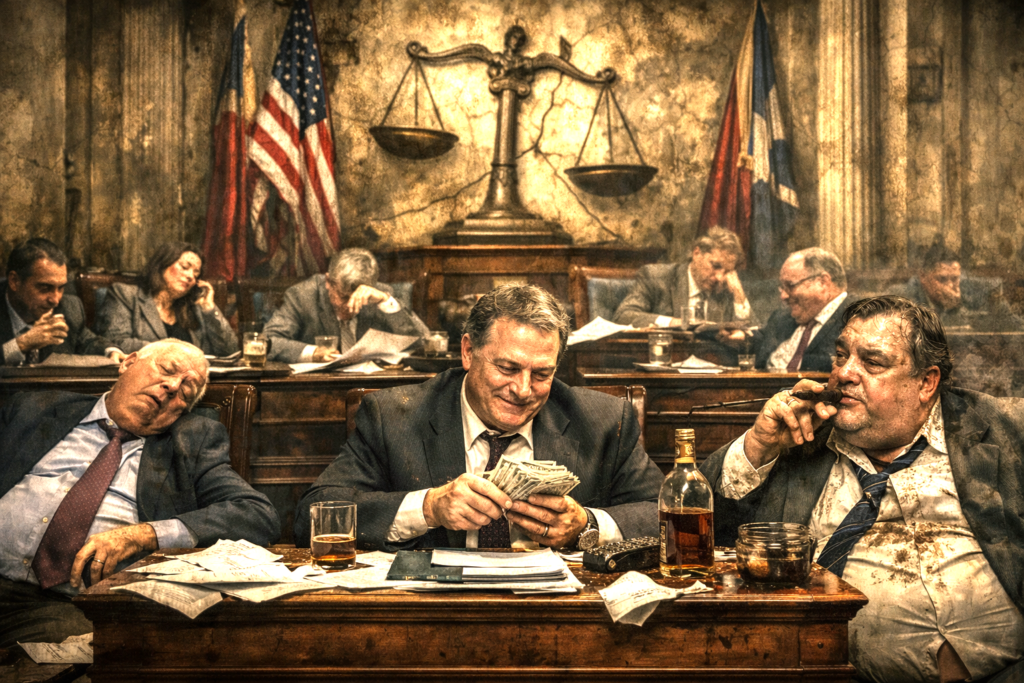
Metastasis of Liquid Society
“The world will little note nor long remember what we say here, but it can never forget what they did here.
It is for us, the living, rather, to be dedicated here to the unfinished work which they who fought here have thus far so nobly advanced.
It is rather for us to be here dedicated to the great task remaining before us—that from these honored dead we take increased devotion to that cause for which they gave the last full measure of devotion.
That we here highly resolve that these dead shall not have died in vain—that this nation, under God, shall have a new birth of freedom—and that government of the people, by the people, for the people, shall not perish from the earth.”
The famous phrase was spoken by Abraham Lincoln, the 16th President of the United States, in his Gettysburg Address on November 19, 1863, during the American Civil War.
These words define the fundamental principles of modern democracy: a system created by citizens, governed by them, and working for their benefit.
Invoking the principle of human equality enshrined in the Declaration of Independence, Lincoln reframed the Civil War as a new birth of freedom for the United States and its citizens.
Lincoln’s carefully chosen words ultimately fulfilled their own prediction: “the world will little note nor long remember what we say here.”
Do we truly recognize in today’s postmodern systems of government what he called democracy—government of the people, by the people, for the people?
Timid rulers charge dearly for deepening crises; they corrupt themselves and encourage corruption as a mechanism of impunity, reaching levels of pandemic state corruption.
Insignificant, ineffective, and ignorant legislators become mental sewers from which obscene speeches are hurled in the so-called sacred space of the people’s representatives.
Obscure figures occupy parliamentary seats through the concealment of contemptible leadership.
They do not dent the corporate armor of entrenched power sectors; their only success is headlines financed by official advertising or the appointment of militants as spokespersons.
Media outlets overflow with political intentionality disguised as intellectual rigor.
Judiciaries, ineffective and permissive toward political and white-collar crime, survive as budgetary remnants of a decadent system while competing for votes to advance within judicial careers.
Silently fulfilling their shameful role, they mutilate the penal system through irrelevant “agreements” with dangerous criminals to avoid lengthy and exhausting trials.
They persecute petty crime while displaying social irresponsibility toward victims.
Overcrowded and permanently dehumanized prisons become a “master’s degree” proudly displayed by repeat offenders who return refined or organized.
Threats from drug cartels and the priority of personal and family security bend even the most upright magistrates, while chaos spreads across lawless zones—an anomic expression of unchecked abuse against ordinary citizens.
Social protest becomes corporatized, incited by organized groups that profit from extorting political power.
Union leadership, the supreme example of corporatist dominance, defends its own interests and commercializes violent protest at market price in exchange for “authorizing” social peace.
Other lumpen groups occupy the streets, tormenting citizens while aligned with political-ideological interests that undermine and violate the rights of the productive sector of society.
Corporations of all kinds abuse their power, using the State as an agent of plunder to compensate for unemployment, informality, and misery they themselves multiply.
Second- and third-tier governments, heavily indebted, increase fiscal exaction without accountability. They proudly display their inefficiency and the proliferation of dependents sustained by taxpayers.
Societies overflowing with undocumented immigrants who demand rights denied in their homelands compete in local labor markets and integrate into informality or illegal land occupation.
General disorder prevents proper classification by skill or criminal background.
They demand equal human rights as locals for having been forcibly displaced, adding to electoral chaos that obstructs rational governance.
Some are infiltrators co-opted by governments to help suppress dissent among those who truly produce. Others teach ideological indoctrination under international banners.
This is an invisible pandemic, analyzed as a problem of governance, incompetence, or local corruption, when in reality it reflects a degenerated system of representation for people who simply wish to live in peace and see their natural rights protected.
It hides behind the argument that democracy is the least bad form of government because it allows alternation of power. In truth, it has become utopian; there exists a concert of actors determined to keep extracting from the electorate.
Reality shows that government itself barely matters.
Eight presidents can change in ten years and nothing truly changes.
Disgust manifests openly in protest votes and in the growing universal discredit that seeks, in every election, either the least bad option or a magician capable of reversing the decay of the previous one.
“Impotence” as Alibi
Eco quickly identified the rhetorical trap of corporatized governments.
For him, when a State claims it “cannot” confront drug trafficking or organized crime, it is practicing deliberate abdication.
In his anomic vision, power has shifted from government palaces to financial flows, often fueled by narcotrafficking.
Governments simulate impotence to avoid admitting complicity through omission.
It is easier to appear weak than corrupt, because weakness generates resignation, while corruption generates repulsion.
The Rise of Kakistocracy (Government by the Worst)
Eco analyzed how the loss of cultural and educational values degrades politics.
What is often described as the aggressiveness of the uneducated can be understood as the collapse of merit.
Loss of shame: in a society where education is no longer a social elevator, the uneducated do not aspire to learn but to destroy those who know.
Leaders no longer need to be statesmen; they must be influencers who connect with the anger of the masses.
Aggression becomes legitimate political currency, and ignorance is displayed as authenticity.
The “Pornography of Corruption”
Eco described the transition from a society that hid its vices to one that exhibits them.
Impunity and obscene privilege become displays of dominance.
Impunity as message: the corrupt no longer hide.
By flaunting illicit wealth, they send a message of power: “I am untouchable, and the laws that bind you do not bind me.”
The end of the social contract: when citizens perceive that crime is business and government its accomplice or cover, democracy ceases to be a system of coexistence and becomes a no-man’s land.