
The Priests of “Barnumism” Have Ruined Economics
Deirdre Nansen McCloskey (born in 1942) is a distinguished American economist, historian, and classical liberal theorist, recognized for her influential contributions to economic history, rhetoric, quantitative methods, and philosophy.
Previously known as Donald N. McCloskey, she completed her gender transition in the mid-1990s, an experience she recounted in her 1999 memoir, Crossing: A Transgender Memoir.
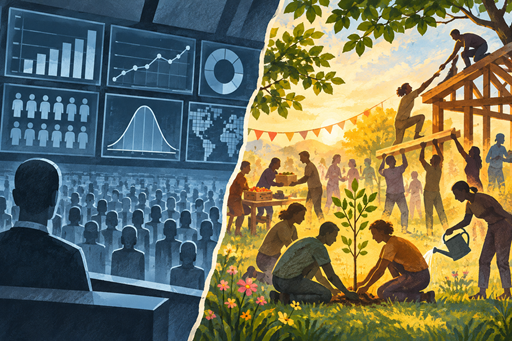
For decades, the corridors of economics departments have been dominated by a sect of bureaucrats with pretensions of being nuclear physicists.
The study and practice of economics have been systematically hijacked by a brotherhood of intellectual carnival barkers.
This is what we might call “Barnumism,” after P. T. Barnum, the nineteenth-century showman associated with the saying “There’s a sucker born every minute”: charlatanry, publicity stunts, and methodological illusionism. Garish multicolored charts and shoddy statistics become fireworks designed to dazzle the public and justify the state’s perpetual interference.
The devotees of this counterfeit discipline operate on the assumption that society is a giant laboratory guinea pig and that human beings—those troublesome “talking animals”—are nothing more than variables to be manipulated in a ministerial spreadsheet.
To these social engineers, the economy is not the living fabric of voluntary cooperation but a control panel crammed with fiscal and regulatory levers that they, in their self-proclaimed infinite wisdom, supposedly know how to operate better than anyone else.
The result of this technocratic delusion is a legion of camera-hungry politicians and advisers who behave like carnival pitchmen.
They hawk miracle cures in the form of regulatory patches, cross-subsidies, and price controls to remedy distortions that, ironically, state intervention itself has created.
They confuse statistical significance—a numerical result churned out by computers to satisfy the demands of academic committees detached from reality—with genuine economic significance. They applaud like trained seals when an algorithm predicts a fictitious one-tenth-of-a-point rise in purchasing power, even as the freedoms of thousands of real innovators and entrepreneurs are strangled.
To imagine that the intricate web of human relationships, shaped over centuries by custom, law, language, and morality, can be reduced to a set of differential equations is the height of intellectual arrogance.
The modern “Barnumist” lives in a permanent hallucination: he believes that social order can be designed from a government desk.
This attempt to turn economics into a kind of social physics is not harmless: it amounts to a moral fraud.
By reducing the citizen to a mere mathematical utility function, the planner strips the individual of the most sacred attributes of all: agency and moral dignity.
The citizen ceases to be an autonomous agent with plans, dreams, and responsibilities and becomes a mere pawn to be squeezed, manipulated, or punished.
The guardians of this fiscal circus make their living diagnosing ailments they themselves aggravate, casting themselves as saviors from crises brought about by their own regulations.
Without their monopoly on regulatory improvisation and the constant echo of their sterile models, their very existence depends on perpetuating suspicion and tutelage over civil society.
In Defense of Humanomics: Bringing Human Beings Back
Faced with the sterility of power’s bookkeepers and the arrogance of statistics’ high priests, intellectual and civilizational renewal will not come from more punitive algorithms or bureaucratic databases, but from an approach that restores human beings to center stage: humanomics. For McCloskey, economics must engage with the humanities.
People are not driven exclusively by mechanistic impulses or by scraps falling from the central planner’s table; they are moved by narratives, meanings, metaphors, and ethical convictions.
To ignore language and the cultural framework of human action is like trying to explain the beauty of a symphony solely by measuring air pressure in a concert hall: one might capture the noise while utterly destroying the music.
Humanomics reminds us of a fundamental truth: human beings are conversational creatures. Economics is not the study of the static allocation of given resources in an institutional vacuum, but the dynamic drama of human creativity in freedom.
Where, then, does the true wealth of nations come from?
Economic history exposes the myths of central planning.
The colossal phenomenon McCloskey calls the “Great Enrichment”—the unprecedented explosion of prosperity that, beginning around 1800, lifted much of humanity out of age-old, seemingly unchanging poverty—did not spring from government offices, subsidies bestowed by decree, the primitive accumulation of capital, or fiscal redistribution.
It arose from a profound and radical rhetorical and moral revolution: the “Bourgeois Deal.”
For the first time in human history, a Western society decided to grant ordinary people dignity and freedom.
Artisans, merchants, inventors, and entrepreneurs ceased to be regarded with contempt or predatory fiscal appetites and were offered an implicit revolutionary bargain: “Leave me alone, respect my autonomy, my word, and my property, and even though I may fail, if I succeed I will ultimately make society as a whole richer.”
That shift in public conversation—from scorning commerce to respecting it—unleashed a wave of innovation and voluntary cooperation that far exceeded any calculation made by the bureaucrats of the day.
Wealth does not originate in the offices of social engineers; it springs from the ingenuity of millions of free individuals who cooperate in decentralized ways because their right to pursue their own destiny is recognized.
However much twenty-first-century planners try to disguise their authoritarianism behind an ultramodern façade of big data, algorithmic governance, and climate or fiscal technocracy, the essential lesson remains unchanged: statism always fails because it collides with human nature, while the free market succeeds precisely because it works with it.
It is time, once and for all, to tear up the spreadsheets of the tyrants behind their desks. It is time to close the altars of “Barnumism” and banish the pretensions to science of those who confuse coercion and monopoly with progress.
Economics is not a cold number spat out by a useless matrix; it is the science of human choice, peaceful cooperation, and keeping one’s word.
Let us return economics to the humanities.
Let us restore sovereign dignity to the market and the individual.
And let history judge the architects of the technocratic circus not as visionaries of the future, but as what they have always been: the sad, transient, and costly clowns of a spectacle that humanity, sooner or later, learns to dismantle.
Limits of Statistical Reductionism
Humanomics and Individual Dignity
Freedom and Great Enrichment
Continue reading in Global Order and Geopolitics
Apoyá la continuidad de Perspectiva Liberal
Perspectiva Liberal es un espacio editorial independiente que no cobra por las notas.
Si valorás este trabajo y querés colaborar con su continuidad, podés hacerlo mediante un aporte voluntario a nuestra cuenta Prex 13440.
o por Mercado Pagolink.mercadopago.com.uy/perspectivaliberal