Of Cardboard Martyrs and the Infiltration of the Machine-Gun Gallant
It came to pass, reader, that once the seed of discord had been sown, it had to be watered with something thicker than ink. It required the mystique of gunpowder.
For it is well known that enthusiasm is a disease young militants contract through lack of experience in recognizing the vox populi, and that the old encourage through an excess of cynicism.
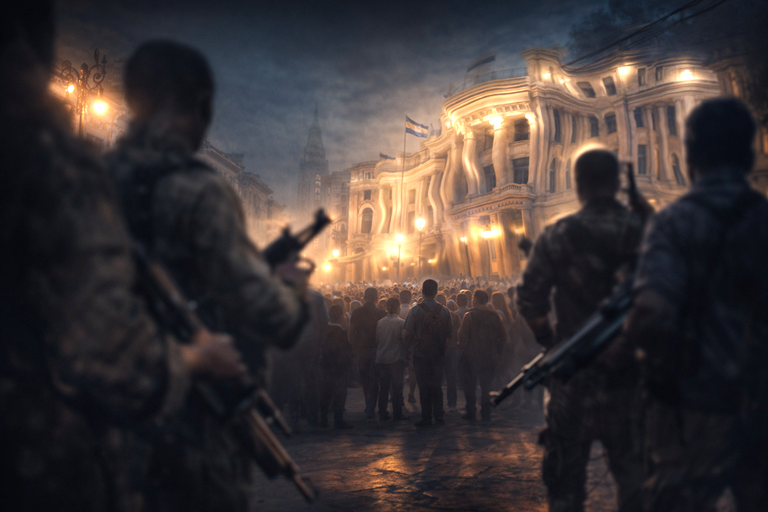
In the streets of Montevideo, which until then had known only the measured pace of citizens heading to work, shadows began to appear, walking with chests puffed up by an adjectival justice that did not come from courts established by law, but from distant jungles.
Thus appeared on the stage that knight of the sorrowful fatigues, the Argentine with the lost gaze, who decided that the best way to heal a continent’s wounds was by opening new ones.
The “Che”, that jungle dandy who understood before anyone else that in politics a good photograph is worth more than a hundred won battles, became the model of a new knight-errantry, whose banner was a rifle against a firing wall.
But alas, their lances were not made of ash wood, but of Czechoslovak steel, and their windmills were not giants, but institutions that provided order and the freedom to repel foreign impostors.
The archives unearthed by Yofre speak of “Operation Manuel”, a name that sounds like a village baptism but concealed the logistics of an empire of shadows.
It was not the people rising up, as the epic ballads of Havana proclaimed. It was agents trained in the basements of Slavic intelligence arriving with false passports and suitcases full of explosive utopias.
Betrayal, when dressed as idealism, is a commodity that sells itself, especially among those who have never had to till the land to eat.
In Uruguay, Cuban frenzy found an exquisite breeding ground, despite the Che’s hypocrisy when, at rulers’ banquets, he denied that “revolution” was indispensable in the country, even as he demanded it at the University.
The “machine-gun gallants” and dollar-paid infiltrators seduced the brightest minds of the era.
Poets who could not load a rifle wrote odes to violence, and lawyer-legislators, meant to defend the law, conspired to dynamite it.
Then came the great miracle of stupidity: absolute contempt for the middle class.
Those who produced resources, who sustained the nation’s balance, were declared “enemies of the people”.
“There is no greater tyranny than that of one who takes away your right to prosper in order to grant you the privilege of being equally miserable.”
Scarcity became fashionable.
Essential goods began to disappear, not because the land was barren, but because hatred is the worst fertilizer for commerce.
Markets, once as fertile as the gardens of Murcia, began to wither under the weight of egalitarian “planning” and redistribution by enlightened men who could not tell a plow from a bayonet.
The black-and-white system radicalized. Either you were a saintly revolutionary or a demonic oligarch.
Nuance, that jewel of balanced civilization, was thrown into the gutter.
Meanwhile, in the shadows, the island’s embassy in Montevideo became a hive of spies.
Through it flowed the money that would finance the division of families and the breaking of lifelong friendships.
Cruelty was not only in bullets, but in the destruction of trust.
Children were taught to suspect their fathers, neighbors to denounce friends.
Because a divided people is a people that surrenders, bound hand and foot, to the first charlatan who promises unity through punishment.
Uruguay, the nation of consensus, began to bleed at the seams.
Deception spread like a plague in gala attire, and no one seemed to notice that the “liberators” carried in their backpacks chains heavier than those they claimed to break.
The middle class, harassed by the hunger for essentials and the contempt of the arrogant, began to watch its orderly world collapse under the weight of a bloody operetta no one had asked for, but everyone was forced to attend.
But who were the true architects of this ruin. What names appeared on the payrolls of betrayal that Yofre rescued from the basements of history.
The answer is not in public square speeches, but in the cold reports of spies watching from the penumbra.
How did the money from kidnapped businessmen begin to feed this machinery of hatred years later.
What role did the “ambassadors of nothingness” play in the fall of democracies that believed themselves invulnerable.
Prepare for the next chapter, where the scene shifts to the palaces where alliances of blood and bribes were forged, and where we will see how Chávez’s shadow began to stretch long before he himself knew he would become the heir to the ruin of a once-rich country turned into a Bolivarian tragedy.
Next chapter: “Of the Wells of Deceit and the Heir to Incendiary Rhetoric”.