
A small country, a global power, and the cost of failing to understand our true place in the world.
According to several media reports, particularly from El País and Búsqueda, the Uruguayan government has reportedly described the suspension of visas for compatriots seeking future residence in the United States as an error or even an absurdity, or at least that is what some official spokespeople have suggested.
This deserves a pause. The alleged mistake would not belong to Uruguay, of course, but to the most powerful country in the world, at least for now, whether one likes it or not. And when such judgments are directed at actors of that magnitude, consequences tend to follow.
It is rather naïve, to put it mildly, to attribute an “absurd” error to the U.S. Department of State or the Department of Justice. Whatever political mistakes they may have made, and they certainly have made several, from an administrative and bureaucratic standpoint it is safe to assume they operate far more efficiently than we do.
Yet this is not merely a matter of naïveté. It reflects a deeply ingrained way of thinking, typical of a small South American country, the same mindset that allowed the appointment of a Housing Minister who failed to pay taxes on her own home, a Director of the National Colonization Institute who was simultaneously a beneficiary of that system, or a minister driving without a valid license. The specific incident is not the core issue, as Senator Da Silva rightly pointed out. Human beings are imperfect. The problem lies elsewhere, in the relationship with rules and accountability.
One could easily add more examples, including those beyond the ruling coalition, such as the astonishing public debate over so-called “menstruating persons.”
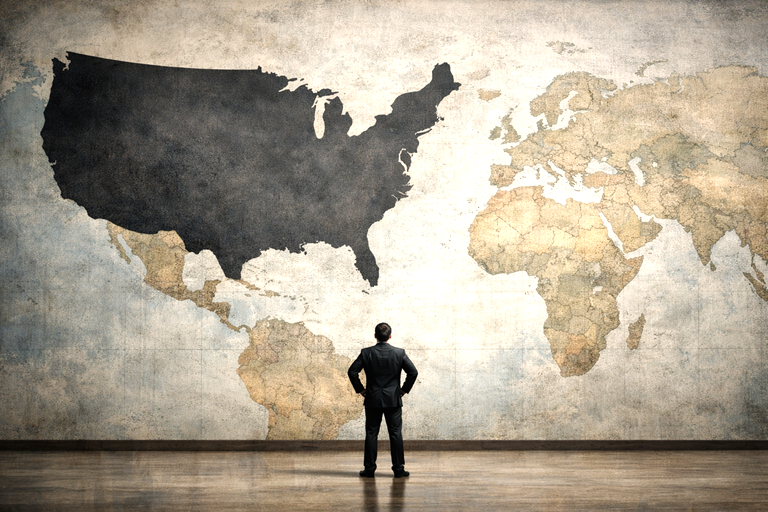
The truth is that the government, and many Uruguayans in general, fail to grasp an obvious fact. We are a very small player on the global stage, and much of that condition is our own responsibility. Not the result of external hostility. High abortion rates in a country of fewer than three and a half million inhabitants, combined with extremely low birth rates and the steady emigration of young people in search of a future, should provoke serious reflection.
Worse still, this deeply rooted belief, particularly strong on the left, that others are always wrong and deliberately mistreat us, achieves precisely the opposite outcome. It ensures that we are indeed treated poorly, but this time without any misunderstanding.
Everything suggests that the visa issue originated in a rushed, poorly thought-out decision to sign a regional statement promoted by countries that enjoy little favor in Washington. The real geopolitical context was, and remains, far more complex, as former President Lacalle Herrera recently pointed out in an interview.
All of this is obvious to any observer, provided they are not staring backward, eyes fixed firmly on the 1960s.
Apoyá la continuidad de Perspectiva Liberal
Perspectiva Liberal es un espacio editorial independiente. Si valorás este trabajo y querés colaborar con su continuidad, podés hacerlo mediante un aporte voluntario a nuestra cuenta Prex.
Cuenta Prex: 13440