
From José Mujica to Francisco Bauzá: two contexts for a longstanding controversy
Not many years ago, José Mujica, former president of the Oriental Republic of Uruguay, declared before a press always eager for his controversial statements that politics prevails over law.
His words, as usual, prompted a wide variety of judgements from politicians and commentators of all stripes.
Many of those opinions were critical.
But what did the former president mean by politics?
Was he referring to petty party politics or, rather, to politics in the Aristotelian sense of safeguarding the interests of the community?
Considering the context in which he made his statement, it is not unreasonable to conclude that he was referring to the ideological aspect of the matter: he was advocating the accession of Hugo Chávez’s Venezuela to Mercosur.
He had the support of the then presidents Cristina Fernández (Argentina) and Dilma Rousseff (Brazil).
Venezuela joined in 2012 and was suspended in 2016 because the country of twenty-first-century socialism had exceeded the deadline for incorporating the rules required by the bloc.
In 2017, its suspension was ordered following a ‘breakdown of the democratic order’ during the presidency of Nicolás Maduro.
The question of the relationship between law and politics is not new, either in its formulation or in its resolution.
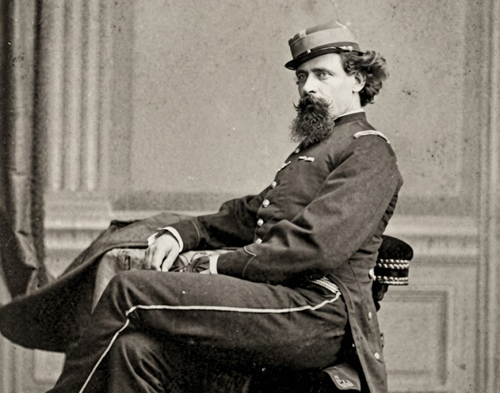
The legislator, historian, writer, diplomat, journalist, constitutional scholar, literary critic, poet and eloquent orator Francisco Bauzá (1849–1899) had already addressed the question and resolved it in similar terms.
Admittedly, the circumstances were far from comparable, but they provide a good example of political doctrine and practice.
It is also true that Bauzá was not the first to address this contradiction.
Human history abounds with similar examples.
Colonel Lorenzo Latorre’s coup d’état ushered in a three-year period of order in the turbulent Uruguay of those days.
The provisional government ended with a return to electoral politics, in which Latorre was elected constitutional president.
One of the first concerns of the elected chambers was what to do with the various provisions enacted during the de facto period.
Strictly speaking, they were legally invalid because they had been enacted unconstitutionally, that is, by bodies that lacked the authority to issue them.
Yet the fact remains that they were enacted and applied, that judges took them into account in their rulings, and that they were enforced.
The matter was discussed during the ordinary sessions of the Chamber of Representatives on 21, 25 and 26 April 1879.
The parliamentary committee charged with examining the matter submitted two reports.
Bauzá was called upon to defend the minority report, which he had supported.
On 26 April, the representative elected for Soriano addressed the chamber.
The issue has two sides, and both must be considered.
One is whether ‘the Executive, or whoever acts in its place, can enact provisions having the force of law in extraordinary circumstances and when the legislative body does not exist’.
The orator says it ‘can’, and the proof is that it did.
But this is the constitutional aspect of the matter, and the question must be understood as asking whether it can do so without violating the Constitution.
The other side is the political question: ‘Can the National Assembly annul three years of the official life of a people without embarking upon retroactive legislation, thereby provoking the disruption and upheaval inherent in such a course of action?’
Clearly not.
He therefore suggests a middle course.
He proposes a compromise, because politics, like life itself, is nothing more than a constant process of compromise.
He cites as precedents the legislative measures adopted after the dictatorships of Generals Rivera and Flores, intended to safeguard acquired rights.
He sees no reason not to follow the same procedure.
He recalls that, when elections were called to constitute the chambers then in office, some maintained that abstention was the appropriate response.
He considers that this would have been a serious mistake, because if the objective was to bring the dictatorship to an end, that was not the way to achieve it.
The solution could not be a revolution that would merely replace one dictatorship with another, whilst abstention would only perpetuate the existing situation.
Having chosen the appropriate path, the Assembly ‘had to accept, as it has done, the inheritance that the previous government left it as a whole’.
That inheritance was the national patrimony, and the legislators were obliged to safeguard it, for it had been entrusted to them on that understanding.
‘Three years of the life of a people cannot be wiped out with a stroke of the pen.’
It was not a matter of legitimising the acts of the dictatorship, but of accepting accomplished facts.
Otherwise, everyone would be complicit, ‘because for three years they have allowed it to exist, legislate and govern without hindrance, punctually obeying its every order’.
Many disliked the speech, but no one told him he was wrong.
Politics and law
Legal continuity of the state
Transition from de facto rule
Continue reading in Global Order and Geopolitics

Apoyá la continuidad de Perspectiva Liberal
Perspectiva Liberal es un espacio editorial independiente que no cobra por las notas.
Si valorás este trabajo y querés colaborar con su continuidad, podés hacerlo mediante un aporte voluntario a nuestra cuenta Prex 13440.
o por Mercado Pagolink.mercadopago.com.uy/perspectivaliberal