Author name: GUILLERMO SILVA GRUCCI

autor y escritor destacado
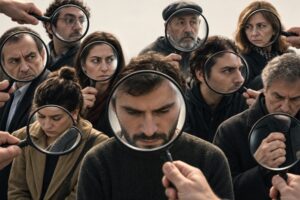
Symbolic depiction of ideological conflict and the debate over state neutrality in a university setting.
Global Order and Geopolitics

Secularism Between State Neutrality and Ideological Conflict

The debate over secularism in Uruguay once again confronts competing constitutional interpretations and reopens the discussion about the role of the State, the university and academic freedom. In our previous article, we recalled the opinion of former Socialist legislator Dr. José Korzeniak regarding the nonexistence of the “two libraries of law,” because the second one […]

Secularism Between State Neutrality and Ideological Conflict Read Post »

Global Order and Geopolitics

Secularism, Sovereignty and the Constitution: A Debate That Goes Beyond a Council

The proposal to create a Council on Secularism revives the constitutional debate over state neutrality and the limits of parliamentary power in relation to popular sovereignty. In a previous article, we referred to Senator Bordaberry’s bill, which sought to create a Council on Secularism to safeguard this fundamental republican principle, systematically disregarded by the influence

Secularism, Sovereignty and the Constitution: A Debate That Goes Beyond a Council Read Post »

Students gathering outside an occupied public high school in Uruguay
Global Order and Geopolitics

How the Left Won Uruguay’s Battle for the Classroom

The politicisation of public education turned Uruguay’s classrooms into ideological territory and left the defence of secular neutrality unresolved. The application of Gramscianism across the different spheres of society, and particularly in public education, began to yield electoral dividends in Uruguay.First it was the department of Montevideo that fell into the hands of the left.

How the Left Won Uruguay’s Battle for the Classroom Read Post »

Antonio Gramsci above a contemporary crowd symbolising cultural hegemony and ideological influence
Global Order and Geopolitics

How Gramscianism Conquered Uruguayan Culture

The strategy of cultural hegemony shifted political struggle towards education, the media and institutions. In previous articles, we examined the process by which Marxism co-opted education in Uruguay.A task accomplished in the best Gramscian fashion, which can be described as successful—regrettably successful.The Italian Antonio Gramsci argued that a ruling stratum did not remain in power

How Gramscianism Conquered Uruguayan Culture Read Post »

Historic classroom at the Faculty of Architecture in Uruguay during 1968
Global Order and Geopolitics

From Castro to the University: A Story Uruguay Still Refuses to Revisit

The evolution of the Cuban regime and its influence on segments of Uruguay’s university system raise historical questions that remain unresolved. Radio Carve, a Montevideo radio station that at the time maintained a firm anti-communist editorial stance, used to fill its commercial breaks by juxtaposing two speeches by Fidel Castro.I heard them so many times

From Castro to the University: A Story Uruguay Still Refuses to Revisit Read Post »

People in business attire laughing while standing in rain puddles, symbolizing political short-term thinking and institutional blindness.
Global Order and Geopolitics

The Silent Takeover of Uruguay’s Public University

How the 1958 university autonomy reform, according to the author, unintentionally enabled a long-term ideological transformation that traditional parties failed to foresee. Anyone who has not even attended, but simply walked past the entrance of a public educational institution in Uruguay, cannot have failed to notice the walls covered with political slogans. The interiors are

The Silent Takeover of Uruguay’s Public University Read Post »

Allegorical editorial artwork depicting the unintended consequences of scientific progress during the Industrial Revolution.
Global Order and Geopolitics

When Progress Dreamed of Abolishing Reality

Marcellin Berthelot’s vision of the twenty-first century reveals how nineteenth-century scientific optimism underestimated the complexity of human nature and history. Life Shall Blossom / Pain Shall Be No More We recalled in our previous article Marcellin Berthelot. Let us now explore another aspect of his personality: that of a prophet.On April 5, 1894, during a

When Progress Dreamed of Abolishing Reality Read Post »

Execution of Louis XVI during the French Revolution illustrating the relationship between revolutionary ideals, political violence and the emergence of a secular moral order.
Uncategorized

From Science to Revolution: Berthelot’s Moral Vision

How a scientific conception of morality helped shape one of the most influential ideological projects of the modern world. To Fraternity Through Revolution A nomenclature is a catalog of proper names.Applied to city streets, it consists of assigning names to roads or public spaces.This could be done simply by using numbers, making orientation easier, but

From Science to Revolution: Berthelot’s Moral Vision Read Post »

Citizens outside a public institution symbolizing constitutional limits and majority power.
Global Order and Geopolitics

Bauzá Against the Power of Temporary Majorities

Bauzá’s constitutional defense during the exile of Máximo Santos offers a timeless warning about the dangers of using political power to override constitutional order and popular sovereignty. After the attempt on his life, General Santos eventually resigned from the presidency and left for Europe with his family.After General Tajes was elected, he appointed Dr. Julio

Bauzá Against the Power of Temporary Majorities Read Post »

Historical parliamentary debate about political responsibility and constitutional order
Global Order and Geopolitics

When Politics Corrects the Law: Francisco Bauzá’s Forgotten Lesson

A debate born after Latorre’s dictatorship offers enduring lessons about legality, institutional stability and political responsibility. Not many years ago, a former President of the Republic, whose name I do not wish to recall, stated before a press always eager for his controversial remarks that politics prevails over law.His words, as usual, generated the most

When Politics Corrects the Law: Francisco Bauzá’s Forgotten Lesson Read Post »

Scroll to Top