
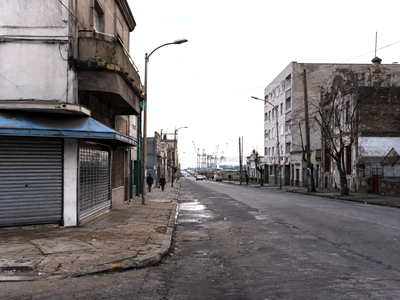
When budgetary formalism replaces the debate over debt, state spending, and the economic foundations shaping Uruguay’s future
THE LITURGY OF FAILURE
Accountability, the Rearview Mirror of a Lost Course
By Dr. Nelson Jorge Mosco Castellano
There is a strange fascination in Uruguayan politics with consecrating bureaucracy as a substitute for management. And with justifying the political system because, at the last moment, just before disaster, it agrees that what should be rejected is tolerated.
Every year, the ritual of Accountability unfolds in Parliament with the solemnity of a secular mass.
Volumes of spreadsheets and pen drives pile up, decimals of budget execution are debated, and statistical recriminations are exchanged over who spent more or who administered scarcity more neatly.
But this formal display conceals a profound conceptual trap: the Political System is summoned to audit the neatness of a shipwreck.
The central problem with this exercise is not merely technical; it is the realization that we have been dragging along a budget that produced these consequences. Starting from the basis of a National Budget that is mistaken in its premises and objectives, suffocating in its absurd design, and statist in its perennial vocation, turns Accountability into an institutional farce.
Trying to extract positive conclusions, flashes of reform, or signs of modernization from an instrument flawed at its origin is an exercise in collective self-deception.
Each new Accountability process brings to the table a fundamental tension in modern public management: the gap between the bureaucratic formality of accountability and real effectiveness in structurally solving the country’s problems.
When the legal format is fulfilled, but the economic Gordian knots remain intact, the democratic exercise becomes an empty ritual.
THE FOUR HORSEMEN OF BUDGETARY STAGNATION
Analyzing the execution of this Budget without questioning its pillars means ignoring the four anchors that systematically sink the country’s competitiveness:
Debt as unavoidable inertia:
Public accounts are managed under the illusion of an accounting balance sustained through ever-growing liabilities.
Every point of debt incurred to cover current spending is a mortgage on the future of new generations through 2060; a financial tribute paid by irresponsibly diverting resources away from real investment and technological development.
Social security as a bottomless pit:
Social security continues to be treated with cosmetic patches and marginal cuts, avoiding a direct debate over a system that consumes colossal resources to cover a structural black hole that deepens through demagogic benefits for retirees and imperturbable extensions of Unemployment Insurance for active workers.
The priority is placed on putting out social-security fires rather than on capitalizing individual savings and freedom of choice. Conceptual financial errors are repeated and loaded onto the backs of formal workers, while repayments to retirees are generated through the blunt force of postponed spending and promises of full repayment left intact.
The systematic punishment of the productive engine:
Far from unleashing market forces, the fiscal architecture of this budget punishes the dynamic, foreign-currency-generating sectors with tax voracity, sectors that the political system considers its personal estate.
The very source from which wealth springs is punished, drying up the market in order to favor state corporatism. It is a slow euthanasia of the system itself, which, while trying to prolong privileges, ends up killing the cow it milks.
Management through the rearview mirror:
The national economic debate remains trapped in the excuse of comparing the present with past mistakes, completely evading the urgencies of the immediate future.
While the world races toward technological disruption, automation, and the knowledge economy, here people celebrate having executed with millimetric precision an increase in spending justified by socialist excuses that set the country back decades.
THE DANGER OF VALIDATING THE ERROR
Trying to find foundations for improvement within this framework is equivalent to calibrating a broken compass by analyzing the route that already caused us to run aground. Limiting the analysis to the fine print of Accountability, to supposed aggregates that tidy it up, without denouncing that the budget fabricated revenues and abused the lender that sustains it, means validating the idea that the State should grow at the expense of citizens’ freedom and indebtedness.
As Ramón Díaz rightly warned, peoples are not ruined by a lack of resources, but by the persistent error of their economic institutions. Continuing to administer the consequences of a model founded on corporatist privilege and fiscal voracity, while applauding the neatness with which abuses are carried out, is not governing: it is administering decline with an official stamp and a presidential signature.
It is time to stop worshipping the formal spreadsheets of the past and begin to reconsider, without complexes or patches, the foundations of an economic freedom that this budget, by design, is responsible for suffocating even further.
Debt and public spending
Structural social security
Economic freedom and competitiveness
Continue reading in Global Order and Geopolitics
Apoyá la continuidad de Perspectiva Liberal
Perspectiva Liberal es un espacio editorial independiente. Si valorás este trabajo y querés colaborar con su continuidad, podés hacerlo mediante un aporte voluntario a nuestra cuenta Prex.
Cuenta Prex: 13440