
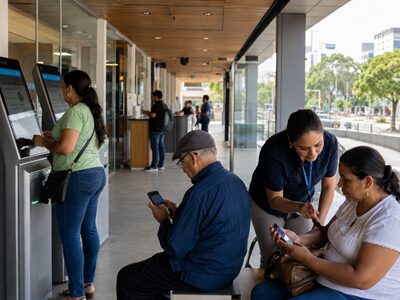
The technological convergence between both countries shows how different institutional trajectories can drive state efficiency, cybersecurity, and public-sector modernization.
DIGITAL MODERNIZATION
Surprise Societies
By Dr. Nelson Jorge Mosco Castellano
The contemporary political economy has demonstrated sufficiently that differences in the development of nations are not due to geographic or cultural factors.
As we have maintained in our advocacy, it is institutions—both political and economic—that determine the trajectory of a society.
Extractive institutions concentrate power and limit innovation; by contrast, inclusive, productive, creative institutions foster creative destruction and open the way for technological adoption.
In this context, the recent strategic convergence between Estonia and El Salvador to promote a joint technological modernization plan—presented in the global dialogues in Geneva—offers a fascinating case study of how different institutional legacies interact with deliberate impulses for digital change.
– –
The Institutional Contrast: Two Starting Points
To understand their alliance, we must examine the foundations upon which both countries are building their digitalization process:
Following its independence, Estonia chose to dismantle Soviet structures in order to build a competitive market and a transparent rule of law.
Its digital modernization—the X-Road system—is a natural extension of inclusive institutions that demand efficiency, interoperability, and accountability.
El Salvador has undergone a profound renewal of its public administration, promoting a drastic shift toward innovation through strong and reformist executive leadership. From this political center of gravity, the State has decided to pursue accelerated modernization through the National Artificial Intelligence Agency (ANIA) and the comprehensive digitalization of public services in order to overcome the historical shortcomings of the past.
– –
The Alliance and Its Presentation in Europe: The Leadership’s Vision
The deployment of this model in Europe has received strong political support at the highest level.
Salvadoran Vice President Félix Ulloa has been a central figure in articulating this alliance. In his interventions, Ulloa has emphasized that technological modernization is not merely a matter of infrastructure, but a strategic commitment to digital sovereignty, administrative efficiency, and the optimization of the State in the service of citizens.
The presentation of this agenda in Geneva, led by diplomatic representatives of both nations, seeks to bring together Estonia’s technological maturity with El Salvador’s regulatory agility and dynamism. This technological diplomacy positions both countries as references for proactive, ethical government prepared for the challenges of the digital era.
– –
The Synergy: Technology, Efficiency, and Development
From an institutional perspective, the integration of advanced digital-governance and Artificial Intelligence tools acts as a powerful catalyst for efficiency.
The collaboration allows El Salvador to adopt proven methodologies in transparency and cybersecurity, optimizing public administration and accelerating the development of critical sectors such as education and digital health.
For figures such as Vice President Ulloa, this international cooperation represents a key opportunity to consolidate an innovation ecosystem that attracts foreign investment, strengthens human capital, and fundamentally modernizes the relationship between citizens and the state administration.
Within the framework of this bilateral cooperation and its presentation in Europe, the following concrete advances stand out:
Both countries have led key spaces at the international level, such as the First Global Dialogue on Artificial Intelligence Governance in Geneva, assuming the Co-Chairmanship and Global Leadership at the UN, consolidating a bridge between Europe and Latin America for the creation of ethical and secure regulations governing the use of intelligent systems.
El Salvador has shared with European partners its progress in implementing technological tools in public education—supported by agreements with major technology companies—and the development of telemedicine and digital-health platforms such as DoctorSV.
The training of public officials has been strengthened through specialized institutions such as El Salvador’s Higher School of Innovation in Public Administration (ESIAP), taking European best practices in digital governance as a reference.
Salvadoran diplomatic representatives have participated in specialized programs on Estonian territory—such as the Cyber Diplomacy Summer School in Tallinn—to absorb advanced methodologies for digital defense and networked state management.
– –
Current Effects:
For El Salvador, this alliance with a European technological benchmark such as Estonia legitimizes and accelerates its projection as a hub for innovation and technological attraction in Central America. For Estonia, it allows the country to extend its vision of cybersecurity and e-government toward the American continent.
The practical effects of this exchange seek to ensure that state modernization is not merely the digitalization of procedures, but that it is accompanied by solid regulatory frameworks that guarantee inclusion, transparency, data sovereignty, and human oversight in the era of Artificial Intelligence. All with a focus on individual rights and public trust.
The technological modernization of Estonia and El Salvador demonstrates how political will and the strategic adoption of technology can radically transform the operational capacity of the State.
While Estonia contributes its legacy of cybersecurity and e-government, El Salvador contributes a reformist dynamism capable of accelerating technological adoption. The success of this process lies in its ability to build a State that is more efficient, inclusive, and connected to the demands of the twenty-first century.
A remarkable example that highlights how one society, devastated by socialism, decided on a radical shift toward the individual; and another, crippled by corruption, drug trafficking, and the maras, is moving firmly toward transparency and digital democracy.
And without fear of technology, they jointly use the tool for the benefit of their peoples.
Institutions and digital modernization
Governance and cybersecurity
Transformation of the State
Continue reading in Global Order and Geopolitics
Apoyá la continuidad de Perspectiva Liberal
Perspectiva Liberal es un espacio editorial independiente. Si valorás este trabajo y querés colaborar con su continuidad, podés hacerlo mediante un aporte voluntario a nuestra cuenta Prex.
Cuenta Prex: 13440