The Uruguayan Rajka case and communist influence networks operating from Eastern Europe
Communist espionage agents in South America did not resemble the James Bond characters of Fleming’s novels. They neither possessed elegant manners nor a license to kill, nor did they live surrounded by glamorous women. They were ordinary individuals, many of them journalists, like the one examined in this case.
The list of agents serving international communism was not limited to Vivian Trías. It included several other Uruguayans who were ideologically aligned and in need of financial support. One such case emerges from a report written by Trías himself, preserved in the declassified archives of the Czechoslovak StB.
The subject was described as an accountant, former official of the Ministry of Finance and former Chief Accountant of the National Slaughterhouse, a specialist in meat economics who had published several works in his field. Politically, Trías noted that he had been a Batllista linked to the newspaper El Día before joining the Socialist Party in 1962. He had traveled to Cuba, China, the USSR, and other socialist countries, including Czechoslovakia, accompanied by journalist and writer Eduardo Galeano.
Travel functioned as a form of reward and incentive. By 1971, the accountant expressed resentment at not being selected for further international delegations, which led to a crisis and his eventual withdrawal from the Socialist Party. Family difficulties and alcoholism followed, although medical treatment reportedly led to his recovery.
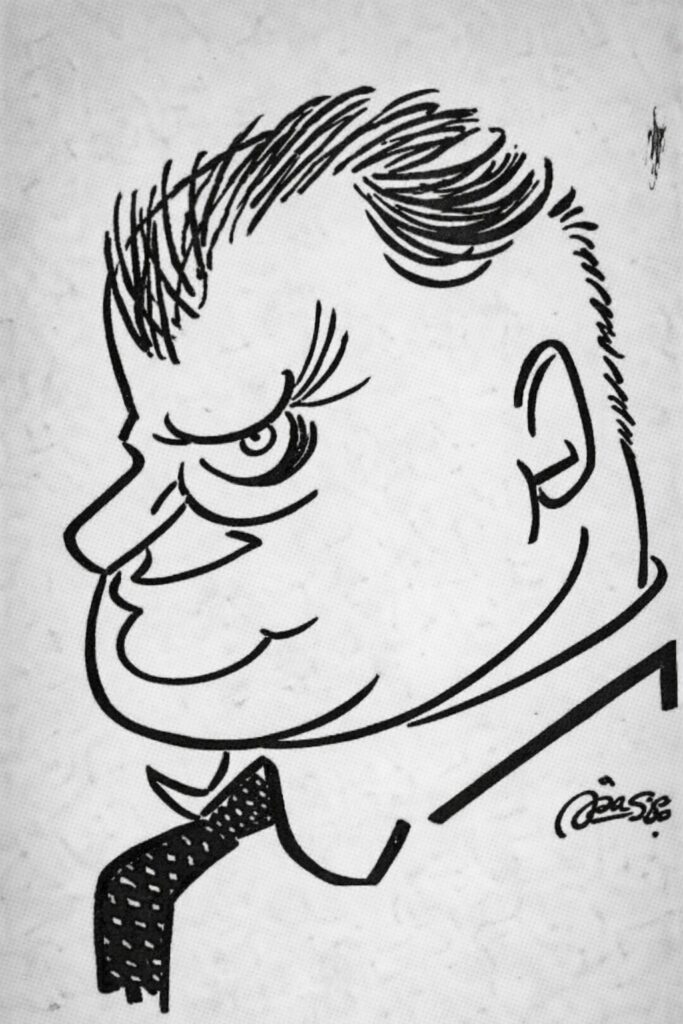
The individual was Guillermo Bernhard, known as Rajka. While Trías’ report did not emphasize his journalistic work, that activity was precisely what interested intelligence services in Prague. Rajka claimed connections with prominent Uruguayan political figures and cited numerous politicians as personal friends.
The main focus of interest for the Czechoslovak intelligence residency was the left-wing newspaper Época, which began receiving financial support from the embassy in 1964. Initial contributions of modest sums evolved into larger amounts labeled as “loans,” whose origin was to remain undisclosed. By signing receipts, Bernhard became fully compromised.
Further documentation reveals financial contributions to Época from Brazilian figures João Goulart and Leonel Brizola, as well as funds originating from Cuba. In 1968, Bernhard received significant payment for his participation in an operation involving the production and distribution of anti–Vietnam War pamphlets.
Despite the Soviet invasion that crushed the Prague Spring later that year, Rajka continued his collaboration and received payment. His service ended in 1974, when growing nervousness and fear of exposure rendered him unusable. The intelligence services abandoned him once his utility had expired.