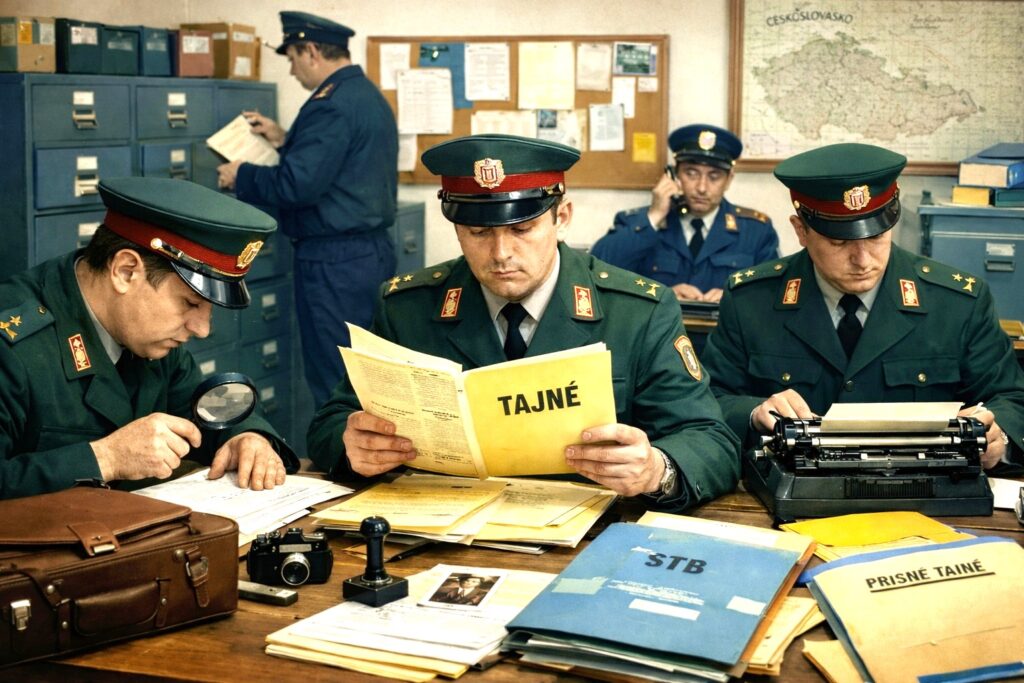
The Uruguayan case and the KGB networks revealed through Eastern European Cold War archives
Spies With Names and Surnames
A secret revealed shakes Uruguayan socialism. The saga of spies operating in Uruguay in the service of the USSR comes to light. Socialists and communists, are they really different?
“I got plenty of nothing,” sings a character in Gershwin’s famous opera.
And, taken literally, we too have plenty of nothing when it comes to KGB activities in Uruguay.
The reason is simple. Russia has understandably not opened its archives to public consultation.
Not even Assange seems to have uncovered anything on the matter.
By contrast, former satellite countries of the USSR have released documentation from their local intelligence services.
That is why we know almost nothing about the espionage activities of África de las Heras in Uruguay, but something about other figures.
What is particularly interesting in this case is that they were local citizens.
Among the countries that chose to make their history transparent is the Czech Republic.
There operates the Institute for the Study of Totalitarian Regimes, a government agency founded in the first decade of this century, whose purpose is explicit in its name.
It maintains an online archive accessible to anyone who understands the Czech language.
Researcher Vladimír Petrilák was born in former Czechoslovakia, which gave him the necessary background for the task.
Together with journalist and translator Mauro “Abranches” Kraesnki, his work resulted in the book The StB, the KGB’s Arm in Uruguay.
Through it, we learned how Czechoslovak intelligence operated in this small but strategic South American country.
The 463-page book is not even the result of an exhaustive investigation into StB activity in Uruguay.
It was the product of chance.
What is often called serendipity.
The authors were researching the Brazilian case when they came across a pseudonym they initially believed belonged to a Brazilian citizen.
Instead, it turned out to be Uruguayan, so they set it aside to continue with their main line of research.
When they returned to the matter, they were surprised to discover it referred to a spy who, according to StB records, “was considered by the service itself as its best agent in Latin America.”
This individual had been assigned the code name “Ríos” by Czechoslovak intelligence.
When this information circulated seven years ago, it caused a strong impact on Uruguayan society.
Which is only natural, because the pseudonym concealed the identity of socialist professor and politician Vivian Trías.
As is customary in cases like this, opinions remain divided.
And different shades float on those waters.
We will address the issue further in a forthcoming article.