
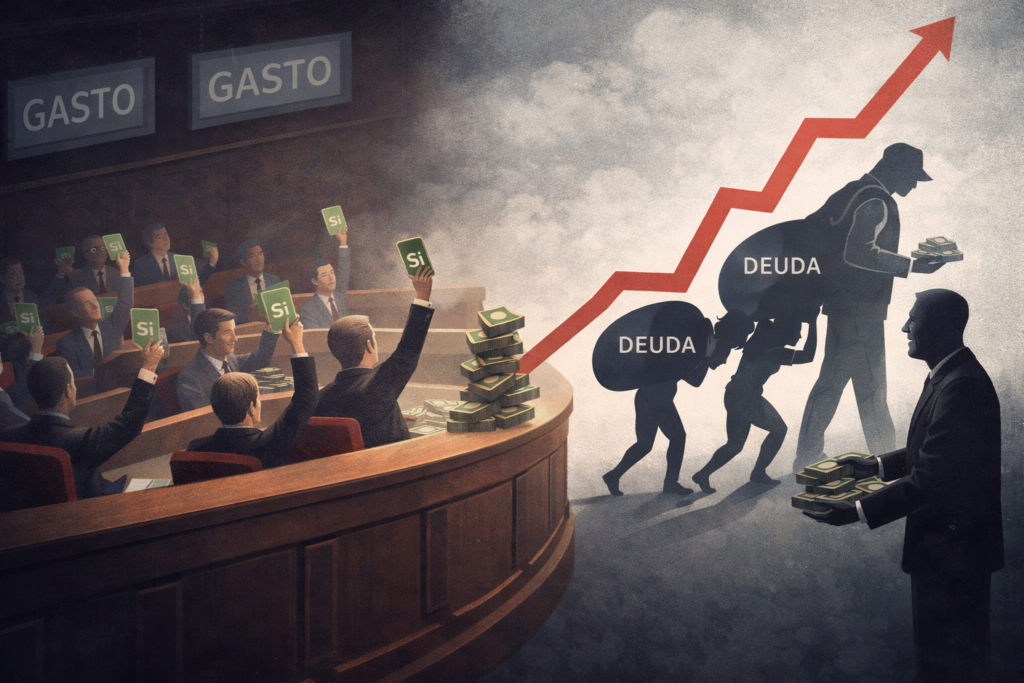
Public debt and political redistribution of capital are creating a structural transfer of resources that compromises the economic freedom and productive capacity of future generations.
– The illusion of financing the present through debt
– The economic decapitalization of future generations
– The moral and political conflict of the welfare state
The current structure of public finances in many Western countries reveals a growing tension between generations. Governments increasingly finance present spending through public debt, transferring the cost of today’s political decisions to citizens who have not yet participated in them.
Public debt is often presented as a neutral financial instrument, a technical mechanism of fiscal management. However, in reality it represents a form of deferred taxation that falls primarily on future taxpayers. When states accumulate debt to finance current consumption rather than productive investment, they create an invisible redistribution of resources from younger and future generations toward current voters.
This dynamic gradually erodes the economic foundations of societies. The accumulation of debt requires higher taxes, inflationary pressures, or reductions in future public services. In all cases, the economic space available to younger generations becomes increasingly restricted.
The political incentives that drive this process are evident. Elected officials tend to prioritize short-term electoral benefits rather than long-term fiscal sustainability. Expanding spending allows governments to distribute benefits immediately while postponing the associated costs.
As a result, the welfare state — originally conceived as a mechanism of social protection — risks transforming into a system that systematically transfers financial burdens to future generations.
This phenomenon creates what may be called an intergenerational conflict. Not a conflict openly expressed in political debate, but a structural tension embedded in fiscal policy itself.
If societies wish to preserve both economic freedom and social stability, it will be necessary to reconsider the sustainability of public spending and the ethical implications of transferring present obligations to citizens of the future.
Apoyá la continuidad de Perspectiva Liberal
Perspectiva Liberal es un espacio editorial independiente. Si valorás este trabajo y querés colaborar con su continuidad, podés hacerlo mediante un aporte voluntario a nuestra cuenta Prex.
Cuenta Prex: 13440