
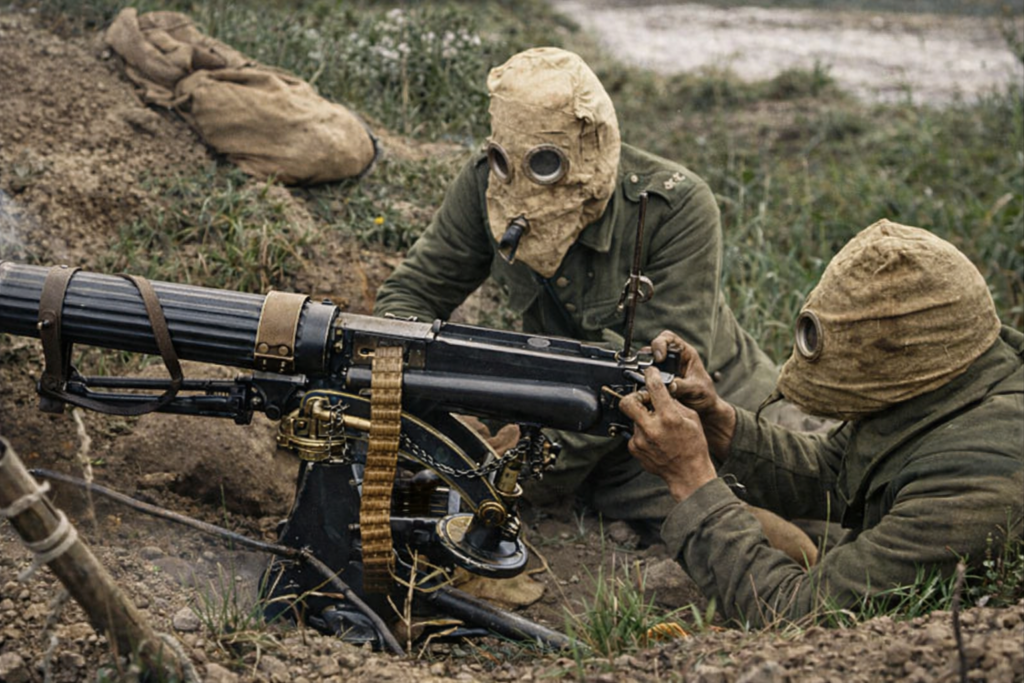
Treaties banning chemical weapons were signed… and then systematically violated
In our previous article we referred to the creation of the Red Cross and the Geneva Conventions for the protection of war victims.
Conventions and treaties continued to be held in different places, all cloaked in the best intentions.
At the same time, technology and science continued to advance, although not always used for peaceful purposes.
On July 29, 1899, the day Mussolini turned sixteen, the Hague Declaration prohibiting the use of asphyxiating gases was signed.
Twenty-five countries originally subscribed to it.
Among them Germany, Austria-Hungary, Russia, France, Italy, Belgium, Denmark, Spain, Greece, the Netherlands, Portugal, Romania, Serbia, Sweden and Norway. The United Kingdom signed the agreement in 1907.
The Sarajevo gunshot triggered the First World War.
The conflict involved the Allies: France, the British Empire, the Russian Empire (until the 1917 revolution).
Italy (from 1915), Japan and the United States (from 1917). Serbia, Belgium, Montenegro, Romania, Greece, Portugal, Brazil, Siam (Thailand) and Honduras.
The other front included the German Empire, the Austro-Hungarian Empire, Turkey and Bulgaria.
And what happened to the Hague Treaty?
It continued to exist in the realm of what ought to be, but…
In April 1915, the Belgian city of Ypres, about sixteen kilometers from the French border, suffered a German attack.
A green-yellow cloud six kilometers wide advanced over the city.
The Germans had opened thousands of cylinders of chlorine gas.
Combined with the water in the lungs, chlorine dissolved the pulmonary alveoli, causing death.
A system that worked as long as the wind did not change and blow it back.
The result of the attack: five thousand dead in ten minutes.
From that moment on, soldiers began to mitigate the effects by soaking cloths in urine and using them as improvised masks.
The last month of 1915 brought chlorine combined with phosgene launched against the British. The cloth defense no longer worked.
Here death took 24 hours. Masks were required.
The British copied the mixture, which they called “White Star”, and used it against the Germans.
Has not Clausewitz said that since war is an act of force: “I am not my own master, but my adversary justifies me as I justify him”?
Would that include filling bridges with women and children to prevent a bombing? Would that maneuver have stopped Hitler?
By 1916, all sides were equipped with masks with charcoal filters and lenses, protecting themselves from chlorine and phosgene.
In July 1917, the Germans attacked with a new chemical weapon: mustard gas.
Again over Ypres.
A more effective attack, because the cylinders marked with crosses of different colors to identify the type of gas were propelled by cannons.
This time the violence fell in liquid form, penetrating uniforms and turning the victim into a blister within hours.
It had low mortality, but incapacitated large numbers of soldiers.
It caused blindness for weeks (Corporal Hitler experienced it), and recovery could take months.
The solution was impermeable clothing.
In addition, mustard gas contaminated the terrain. The unfortunate Ypres remained so until 1918.
The chemical assault included several stages.
Before the attack, the enemy trench was saturated with gas.
If soldiers remained, they died.
If they fled, they were machine-gunned.
Mustard gas was used to flood terrain for days.
Phosgene was used to kill immediately and attack right after.
Another method was to release tear gas first.
It caused tears, and if the soldier removed the mask to wipe his eyes, he was caught by the phosgene that followed.
The Germans threw the first stone, but their opponents did not lag behind.
All those who used these weapons had signed the convention that prohibited them.
The Central Powers lost the war.
The intervention of the United States in April 1917 defined the conflict.
The war left a toll of death and destruction, and also a lesson: a way had to be found to prevent it from happening again.
Some, or at least U.S. President Woodrow Wilson, believed the instrument could be the League of Nations.
Events would prove those expectations wrong.
War and contradiction
Technology and destruction
Broken treaties
This episode shows how international order collapses when force replaces norms
Apoyá la continuidad de Perspectiva Liberal
Perspectiva Liberal es un espacio editorial independiente. Si valorás este trabajo y querés colaborar con su continuidad, podés hacerlo mediante un aporte voluntario a nuestra cuenta Prex.
Cuenta Prex: 13440