
Treating fiscal deficits as a secondary issue may sound compassionate, but it ultimately weakens investment, fuels inflation and undermines long-term social welfare.
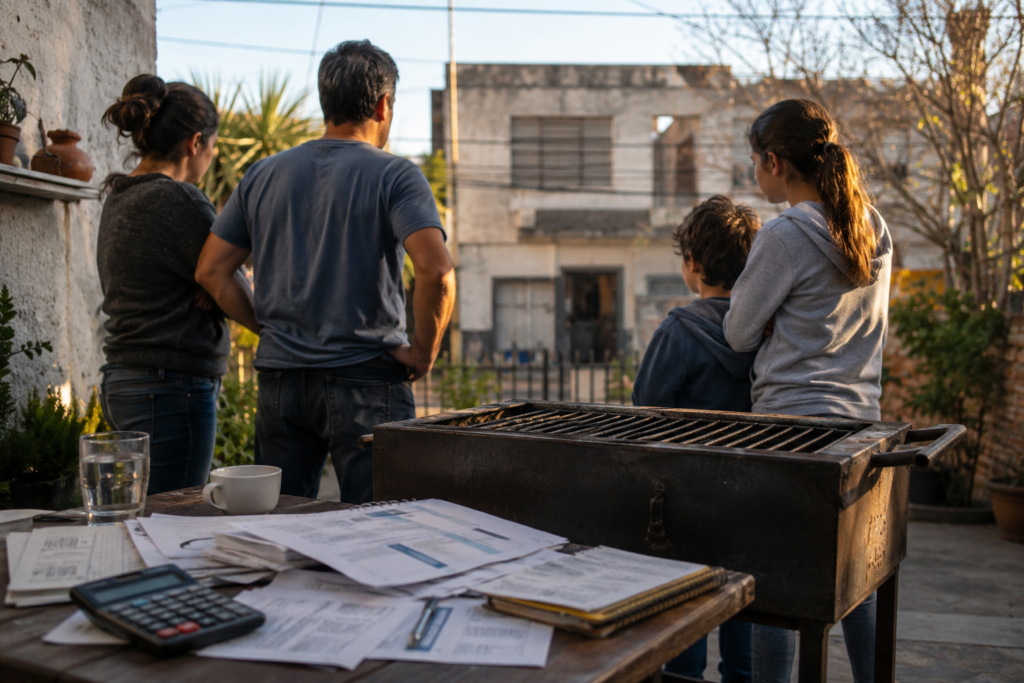
The Myth of the Barbecue Without Fire: When Accounting Becomes an Act of Faith
The Uruguayan economy—that small social experiment where we attempt to defy the laws of fiscal gravity with the same faith as a football fan in the final minute of stoppage time—occasionally offers us true gems of political rhetoric.
The recent position taken by former Broad Front legislator and current Senator Leonardo Delgado, who suggests with an almost messianic air that the fiscal deficit is merely a minor inconvenience compared with the nobility of social priorities, is not something new. It is simply the most persistent déjà vu in our political ecosystem.
It is the eternal battle between the accountant who reminds us that every credit card has a limit and the politician who convinces us that, if we spend with enough love, the bank will eventually be moved to erase the debt.
The Aesthetics of Spending and the Arithmetic of Disaster
If one puts on the glasses of academic sobriety—the same ones that Ignacio Munyo patiently polishes—the technical analysis is as boring as it is conclusive: a fiscal deficit is not an opinion; it is a subtraction.
And when the result of that subtraction remains chronically negative, reality begins sending the bill, even if it never appears on protest banners.
Delgado’s argument is attractive precisely because it claims the moral high ground. After all, who would not wish to be the one who “puts people first”?
The problem is that “the people” are the first to be abandoned when macroeconomic stability begins to collapse.
As experience repeatedly demonstrates, when the State decides that the fiscal deficit is merely an anecdote, financial markets often conclude that the country itself has become a greater risk.
And a country perceived as riskier inevitably pays higher interest rates on its debt.
That is precisely where common sense would burst into laughter from the grandstands.
Imagine the scene: we finance today’s barbecue with the salaries of our grandchildren’s grandchildren and congratulate ourselves for being philanthropists.
The truth is that, in this orchestra, the fiscal deficit is the conductor who, once panic sets in, turns off the lights in the middle of the concert.
When the State, burdened by a permanent deficit, goes out to borrow in order to finance its promises, it competes for exactly the same credit needed by small businesses, technology startups and neighborhood merchants.
Because the State becomes the largest borrower in the market, interest rates are pushed upward.
The outcome is a paradox worthy of an ideological fairy tale: we claim to help people through public spending, yet in doing so we make credit more expensive for those very same people who wish to build businesses, invest or buy a home.
It resembles trying to extinguish a fire by pouring gasoline over it simply because the container is labeled “liquid solution.”
Inflation: The Tax Parliament Never Votes On
If the chosen path is monetary issuance—that irresistible temptation to print money as though banknotes were collectible football stickers—Senator Delgado would do well to read a history of economic crises before breakfast.
Inflation is one of the most regressive mechanisms of wealth redistribution ever invented.
It requires no legislation.
It is a silent, invisible and remarkably effective tax that steadily erodes workers’ purchasing power.
Here irony becomes tragedy.
The politician who promises to defend the poorest citizens ultimately becomes the architect of their declining real income.
While the State celebrates higher public expenditure, prices on supermarket shelves quietly adjust upward.
By the end of the day, the deficit is the cause, inflation is the consequence, and the citizen impoverished by government policy is the victim.
The great debate we should be having is whether social policy should continue to be understood as immediate consumption or whether it should instead be viewed as an investment capable of generating future returns.
If the fiscal deficit continues growing year after year, the State eventually runs out of the financial “ammunition” needed to confront the very poverty its policies have helped multiply.
A controlled fiscal deficit is not an obsession of Harvard economists. It is a form of political insurance that allows scarce public resources to remain available for those who truly need them.
It is the difference between a State capable of responding to endemic poverty, a pandemic or a severe drought, and one that must ask the IMF for permission to purchase painkillers for the politicians’ own “pain” over the poverty they helped create.
The rhetoric that balancing public finances is merely a cold exercise promoted by insensitive liberal economists ignores one fundamental reality: numbers are people.
A deficit written in red ultimately becomes a school without adequate heating or food supplies, a hospital lacking essential medical equipment, or a bridge that is never built to move the country’s production because public resources disappeared paying interest on debt accumulated through political short-termism.
True progressivism—if the term is to retain any meaning—should seek maximum efficiency in public spending rather than irresponsibly opening the fiscal taps.
Governing with fiscal responsibility is not about cutting rights.
It is about preserving the real value of those rights over time.
Because what today appears to be a guaranteed right becomes tomorrow’s broken promise if the resources needed to sustain it no longer exist.
Reality—that inconvenient force stubbornly refusing to submit to political wishes—has the curious habit of remaining stubborn.
It pays no attention to speeches.
It has no interest in opinion polls.
It makes no distinction between the political left and the political right.
When the fiscal deficit becomes chronic, it simply erodes the very structure that sustains social coexistence.
Senator Delgado and many other utopian merchants of illusion should understand that nothing is more socially responsible than maintaining a sound economy.
The final irony is that, by dismissing the importance of fiscal balance in the name of social priorities, they are paving the fastest road toward the very social instability that produces more poverty.
As an old statesman once observed, the road to hell is paved with good intentions and unfunded budgets.
At the end of the day, governing a country is not an act of magic.
It is an exercise in balance.
And no matter how hard politics tries to convince voters that the barbecue costs nothing, sooner or later someone must pay the bill.
It is unfortunate that, by refusing to face the numbers, we may all end up eating nothing but the smoke from the barbecue.
Fiscal discipline
Public spending
Inflation
Continue reading in Economy and Power.
Apoyá la continuidad de Perspectiva Liberal
Perspectiva Liberal es un espacio editorial independiente. Si valorás este trabajo y querés colaborar con su continuidad, podés hacerlo mediante un aporte voluntario a nuestra cuenta Prex.
Cuenta Prex: 13440