
Strategic contrasts between Ukraine, Iran and the persistence of Latin American dictatorships
– Declared threats and deterrence logic
– Strategic asymmetry between conflicts
– Political drivers behind military decisions
Complex situation…
And yet strangely familiar.
That Iran has long destabilized the Middle East and financed armed groups hostile to Israel is something that cannot be objectively denied.
That it is governed by a radical theocratic regime is also true, although it is not the only state in the region where religion plays a central political role.
Iran has repeatedly declared its intention to eliminate the State of Israel, whose creation in historic Palestine followed the real or perceived European responsibility for the persecution of Jews.
Its efforts to obtain nuclear weapons are also widely suspected, although other states — including Israel itself — obtained such capabilities without asking anyone for permission.
However…
When a country openly declares its intention to destroy another state, the situation becomes extremely serious.
We no longer live in the medieval world where principalities devoured duchies and counties in endless territorial wars.
Yet…
Ukraine has endured more than four years of Russian aggression. Western support has largely been limited to defensive weapons and intelligence assistance, while offensive capabilities have been carefully restricted.
In contrast…
The situation with Iran has evolved differently.
The United States has recently conducted heavy air strikes against facilities believed to be linked to nuclear development.
Together with the Israeli Air Force it has also carried out extensive operations targeting strategic infrastructure and senior leadership figures of the Iranian regime.
The contrast between both conflicts is striking.
One could easily identify more than seven differences, as children’s puzzle magazines sometimes ask readers to do.
And yet…
The United States remains entangled in the Venezuelan issue, following a rather inconsistent line. And Cuba, a country suffering severe economic decline and frequent blackouts, continues to persist under a six-decade dictatorship just ninety miles from American territory.
This raises a simple question.
Why does Washington not bring an end to that regime as well?
Many Latin Americans would probably welcome such a move, except perhaps those still ideologically trapped in the political narratives of the 1960s.
For the author, the answer is simple.
Israel.
More specifically, the political situation surrounding Prime Minister Netanyahu.
And that is a geopolitical reality, not antisemitism.
What will happen next?
As the saying goes, only God knows.
In this case, however, it may be more accurate to say that only Donald Trump knows.
Or perhaps he will instead return to the question of Greenland.
Meanwhile…
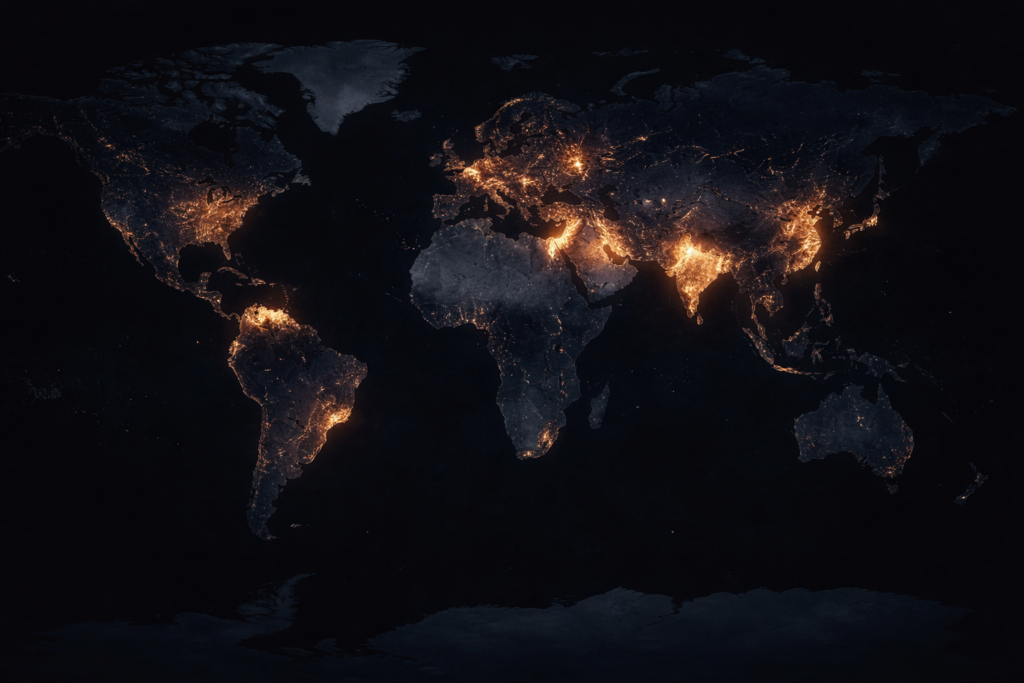
CUBA REMAINS IN THE DARK.
Apoyá la continuidad de Perspectiva Liberal
Perspectiva Liberal es un espacio editorial independiente. Si valorás este trabajo y querés colaborar con su continuidad, podés hacerlo mediante un aporte voluntario a nuestra cuenta Prex.
Cuenta Prex: 13440