Distrust, irregularities and political narratives fuel growing skepticism about elections across the region.
Can Democracy Be Trusted in South America?
Disbelief.
Distrust.
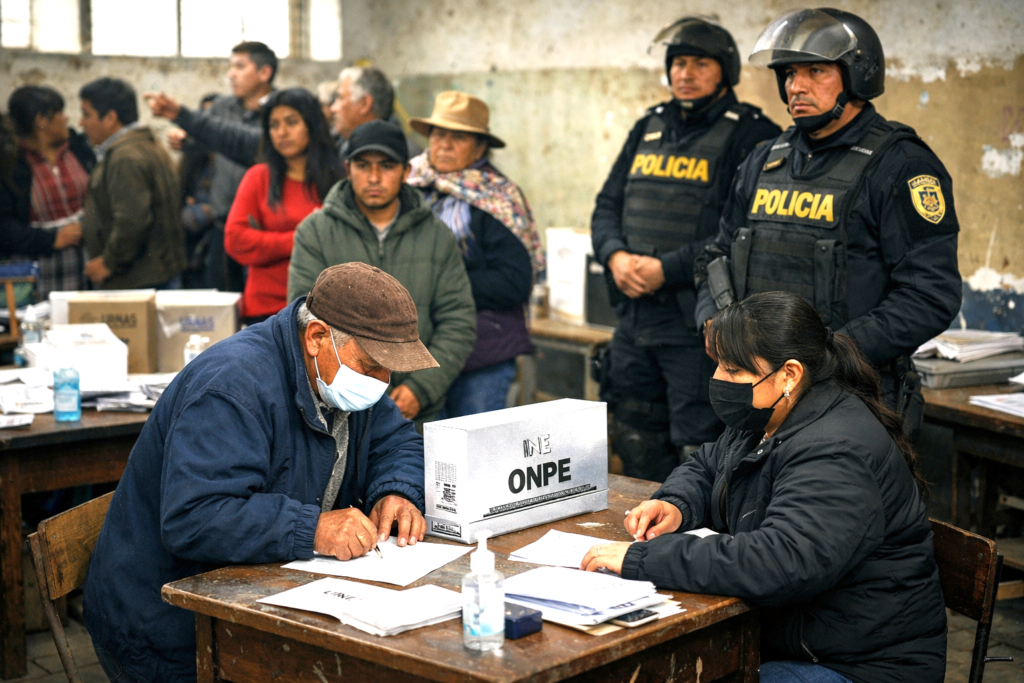
Last Sunday, the first round of presidential elections was held in Peru, a country that in recent years has had more presidents than the total number of players on a basketball team, and already from the closing of the polls, fraud was being discussed.
An unusual event also took place: the following day, a working Monday, those who had not been able to vote on Sunday because polling stations did not open were allowed to vote, missing working hours in the process.
And apparently, there were many thousands in that situation.
A crystal-clear example of democratic exercise!
Rousseau (Jean-Jacques, who else) did not travel to congratulate the electoral authorities because the cost of the trip from Switzerland to Peru is quite high.
And the controversy continues, now no longer about who came first, but about who will take second place, between a conservative and a political heir of the man with the tall and ridiculous hat, so ridiculous that he attempted a coup and was removed and imprisoned the very same day.
Needless to say, former president Castillo — for it is him — and his political successor are from the left, apparently the radical kind.
But that does not matter in South America.
What matters is that people go out to vote, no one really knows for whom due to endless party lists — in some countries resembling bedspreads — and without concern whether the candidates are liberal, conservative, Marxist-Leninist, Maoist, anarchist, or otherwise.
Democracy is the people’s celebration!
That is what many well-paid journalists publish on their front pages, conveniently aligning themselves with whoever wins.
But the chaos is not limited to Peru.
Apparently, one or two polls in Brazil give a slight advantage to Flávio Bolsonaro over Lula, who has had his father imprisoned for more than twenty years for allegedly attempting to destroy the sacred democracy.
But no one counted on D’Artagnan, Judge Moraes, who, exercising his high and partial — not a typo — authority, has already ordered an investigation into Bolsonaro’s son for an unspecified crime against humanity.
Such is how things work in “South America” when it comes to elections.
Why is it that so many people in the region no longer believe in it?
Let us not call Montesquieu to explain it, since not even paying for his ticket, hotel, and a samba show would convince him to come.
Institutional fragility in electoral systems
Public distrust and political legitimacy
Democratic narrative versus real practice
This analysis is part of the Global Order and Geopolitics cluster.
Apoyá la continuidad de Perspectiva Liberal
Perspectiva Liberal es un espacio editorial independiente. Si valorás este trabajo y querés colaborar con su continuidad, podés hacerlo mediante un aporte voluntario a nuestra cuenta Prex.
Cuenta Prex: 13440