
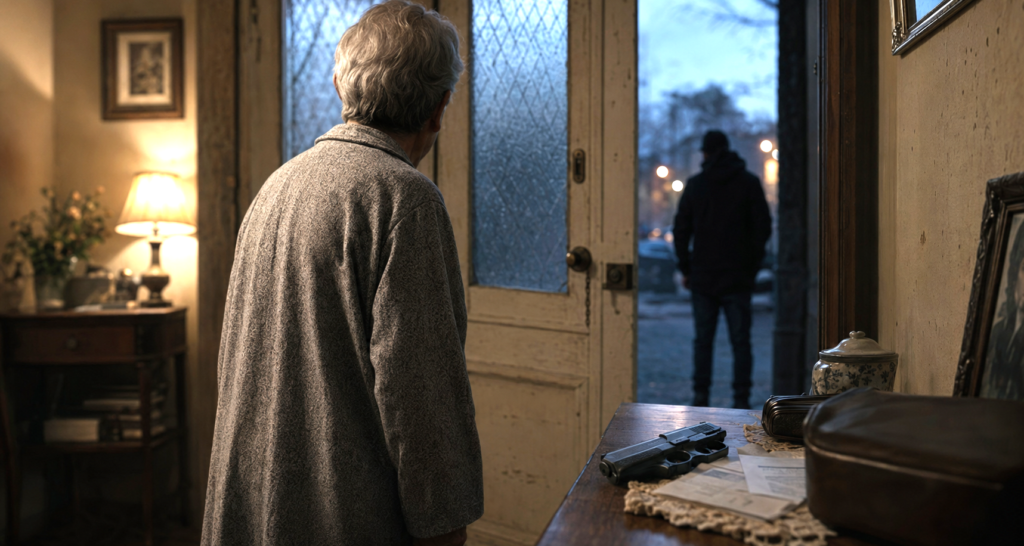
States were born through armed conflict, enshrined their victors, and still decide which violence becomes heroism and which becomes crime
Civilisation is often presented as the overcoming of violence.
Yet societies did not eliminate violence.
They organised it, regulated it and established who could legitimately exercise it.
Many countries were born from wars, conquests, revolutions or struggles for independence.
Those who took up arms against the established power were later turned into liberators, founding fathers and national heroes.
The same acts that could once have been regarded as insurrection, sedition or treason were transformed, after victory, into foundational deeds.
Triumphant violence became history.
Defeated violence became crime.
We do not judge violence solely by the act committed.
We also judge it according to who exercises it, against whom, for what purpose and within which narrative.
An armed man may be called a murderer, soldier, guerrilla, terrorist, revolutionary or liberator.
What changes is not necessarily the material act.
What changes is the legitimacy attributed to his cause.
In Uruguay, a highly influential part of the political leadership came from an organisation that decided to take up arms against a democratic government.
Many of its members later joined the institutional system and were legitimately elected by the public.
Their democratic authority cannot be disputed.
Yet a moral contradiction remains and deserves examination.
Those who considered it legitimate to take up arms to impose a political project should explain why they regard with suspicion the right of a law-abiding citizen to own them in defence of his own life.
A person may renounce violence, reconsider his convictions and sincerely embrace democracy.
But it is difficult to continue portraying one’s own violence as an epic struggle while presenting every defensive capacity of the citizen as a threat to peaceful coexistence.
Weapons cannot be liberating when they serve our cause and necessarily dangerous when they remain in the hands of others.
When force replaces reason
People do not possess equal physical strength either.
A strong young man, a large group or a trained individual has a natural advantage over a woman, an older person, someone with a disability or a citizen standing alone.
That physical superiority grants them no moral superiority.
But it may enable them to impose their will.
A weapon changes that relationship.
It does not automatically turn the weak into the victor.
But it removes the strong person’s certainty that he can dominate without facing consequences.
In that sense, it can function as a technology of equalisation and deterrence.
Marko Kloos argues that a firearm can act as an instrument of civilisation because it forces the physically stronger person to consider the capacity for response of the person he intends to subdue.
The claim should not be accepted as an absolute.
A weapon does not eliminate force.
It redistributes it.
It can also increase the lethality of a dispute, facilitate an impulsive reaction or be used by the person who initiates the aggression.
But those dangers do not negate its defensive function.
The same object can be used to attack, dominate, defend or deter.
The moral difference does not reside solely in the weapon. It lies fundamentally in the decision to initiate violence or to use it to prevent an aggression.
The state that arrives afterwards
The state claims for itself the monopoly on the legitimate use of force.
In return, it promises to protect the lives, liberty and property of those who renounce exercising force on their own behalf.
But the police cannot be present in every home, shop, road or street.
In most attacks, the state arrives afterwards.
It investigates what happened and seeks to punish the person responsible.
For someone facing an immediate threat, that delayed intervention may prove insufficient.
When the state restricts a citizen’s defensive capacity without being able to protect him at the necessary moment, it does not eliminate violence.
It may be returning the advantage to the younger, the stronger, the more numerous or the person who has decided to act outside the law.
A criminal does not give up his weapon because a law prohibits him from carrying it.
The person who usually obeys the prohibition is precisely the citizen who already respected the law.
The debate should therefore not be reduced to an armed society versus an unarmed society.
The real question is what defensive capacity an honest person should retain when the state cannot guarantee immediate protection.
Nor can insecurity be seriously discussed by counting every death as though each expressed the same phenomenon.
Every death has the same human value.
But dying as the incidental victim of a robbery is not the same as dying during a criminal confrontation or as a consequence of a way of life persistently connected with violence.
The way we live creates a field of risks.
This does not mean that every person consciously chooses his death or that all victims are responsible for what happened.
It means that understanding violence requires examining the paths, decisions and environments that precede each outcome.
A society that merely counts bodies, but avoids asking how those who died had lived, abandons any attempt to understand what it claims to be fighting.
We do not live in societies that have overcome violence.
We live in societies that have learnt to classify it.
Some forms of violence become heroism.
Others are justified as a defence of order.
Others are condemned as crimes.
Civilisation does not consist in pretending that force has disappeared.
It consists in preventing force from conferring right.
Because disarming the aggressor may protect society.
But disarming the weak without being able to protect them may mean returning power to the strongest.
Legitimate violence
Weapons and physical inequality
The state monopoly on force
Continue reading in Global Order and Geopolitics
Apoyá la continuidad de Perspectiva Liberal
Perspectiva Liberal es un espacio editorial independiente. Si valorás este trabajo y querés colaborar con su continuidad, podés hacerlo mediante un aporte voluntario a nuestra cuenta Prex.
Cuenta Prex: 13440