
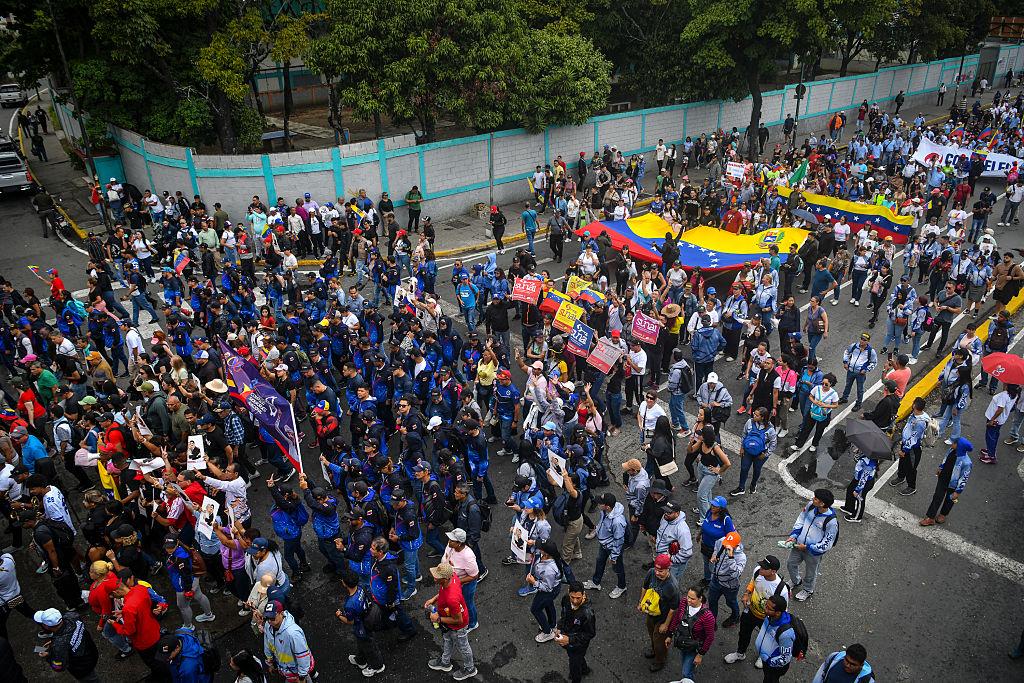
Early signals of pressure gave way to uncertainty, leaving the future of the Venezuelan regime suspended in geopolitical calculation.
When political processes begin, credibility depends on whether they are carried through to completion.
At the beginning of January, many observers across South America perceived a turning point. A symbolic shift appeared to signal that Venezuela’s entrenched leadership was finally being forced into a more accountable position.
Yet that initial gesture now seems insufficient.
The core structure of the regime remains intact. Key figures continue operating without visible structural consequences. Political prisoners remain in detention, and the recently announced “amnesty” appears procedurally dependent on the same authorities responsible for the incarcerations.
That is not institutional transformation. It is administrative maneuvering.
The central question is no longer rhetorical. Why has the process stalled?
Neither Russia, heavily engaged in Ukraine, nor China, currently focused on internal power consolidation, has demonstrated decisive willingness to shield Caracas at any cost. The geopolitical window, at least in theory, exists.
Is the issue purely energy-driven? Has strategic attention shifted elsewhere? Or does Washington consider limited containment sufficient?
Unpredictability can be an instrument of statecraft. But prolonged ambiguity erodes deterrence and credibility.
If a transition was initiated, the strategic cost of leaving it unfinished may exceed the cost of concluding it.
Apoyá la continuidad de Perspectiva Liberal
Perspectiva Liberal es un espacio editorial independiente. Si valorás este trabajo y querés colaborar con su continuidad, podés hacerlo mediante un aporte voluntario a nuestra cuenta Prex.
Cuenta Prex: 13440