
Global Order and Geopolitics

Strategic analysis of international power structures, great power competition and the transformation of the contemporary world order.

A fragmented metallic globe resting on a conference table, with industrial and circuit patterns engraved on its pieces under cold overhead lighting.
Global Order and Geopolitics

The end of naive globalization has already begun

Economy, power and the new strategic realism in the West Munich and the End of Strategic Naivety The immediate temptation was to read Marco Rubio’s speech at the Munich Security Conference as a rhetorical knockout. A forceful, disruptive intervention, even uncomfortable for part of the European audience. But the point is not the stage impact. […]

The end of naive globalization has already begun Read Post »

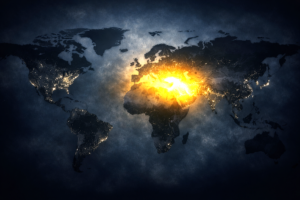
Dimly lit world map with three brightly illuminated power centers and smaller nations in shadow.
Global Order and Geopolitics

The Post-Yalta World Order: Strategic Realism and the Crisis of International Law

Uruguay in the Face of Global Power Reconfiguration and the Erosion of the United Nations The world born in Yalta and Potsdam, later shaped by the Cold War, has changed. As with any major global transformation, it took time for this shift to unfold and even more time for those of us living far from

The Post-Yalta World Order: Strategic Realism and the Crisis of International Law Read Post »

science and technology state of the art in these days
Global Order and Geopolitics

THE RANKING OF USELESS PRESIDENTS

Which leaders are we talking about? The cost of “banality” The worst effect of these leaders is not the money they appropriate (which is considerable), but the opportunity cost. While these societies debated political or criminal responsibility for Cristina’s handbags, Maduro’s birds, Fernández’s parties at the Olivos presidential residence, or the legal proceedings against Sánchez’s

THE RANKING OF USELESS PRESIDENTS Read Post »

Editorial illustration of a man writing in an old book while documents burn and symbolic figures of power and propaganda appear in the background
Global Order and Geopolitics

Soviet Infiltration and Historical Narrative Manipulation in Latin America

The Uruguayan case and declassified intelligence files exposing Cold War operational networks Spies with Names and Surnames: “RIFLE” If a civilian operating as a paid spy for international communism seems reprehensible, what would it mean if he were a military officer? The Uruguayan case as a study of ideological and operational infiltration by the Soviet

Soviet Infiltration and Historical Narrative Manipulation in Latin America Read Post »

Portrait of a middle-aged man with glasses and a serious expression, wearing a beige suit and black tie, seated at a desk in a formal setting, associated with Cold War espionage activities.
Global Order and Geopolitics

Native Latin American Espionage in the Context of the Cold War

The Uruguayan case as a study of Soviet bloc ideological and operational infiltration in Latin America. In The Art of War, written around 500 B.C., Sun Tzu classifies five types of spies: the native spy, the inside spy, the double agent, the expendable spy, and the living spy. He clarifies, although it hardly seems necessary,

Native Latin American Espionage in the Context of the Cold War Read Post »

A deteriorated empty presidential chair in a dark institutional room, symbolizing the collapse and erosion of modern political leadership.
Global Order and Geopolitics

THE RANKING OF USELESS PRESIDENTS

A global ranking of presidents defined by incompetence, corruption, and structural damage The worst in class Historical turning points have always thrown rulers off balance, with only rare and honorable exceptions, who proved genuine wisdom by getting ahead of their time or by choosing a dignified exit. The demands placed on exceptional leaders and technically

THE RANKING OF USELESS PRESIDENTS Read Post »

A silent institutional building casting a long shadow over waiting citizens, symbolizing democratic decay without collapse
Global Order and Geopolitics

The Silent Collapse of Democratic Checks and Balances

How low-intensity institutional failure turns modern democracies into hollow states. Uruguay as a regional case study The final outcome is not always social explosion. Sometimes it is systemic languishing. The country simply stops functioning. Basic services deteriorate to the point of disappearance, infrastructure decays, and the rule of law becomes optional and selective. In this

The Silent Collapse of Democratic Checks and Balances Read Post »

A symbolic illustration of an unbalanced institutional scale showing executive power overwhelming a weakened parliament in a decaying democratic system.
Global Order and Geopolitics

The Silent Collapse of Checks and Balances in Modern Democracies

How political incompetence and permanent debt hollow out parliaments and suffocate productive economies When taxation is no longer sufficient, Parliament authorizes permanent increases in debt or monetary issuance, which function as deferred or hidden taxes, deepening long-term damage without any serious cost-benefit analysis. What may once have been, millennia ago, a mechanism to overcome critical

The Silent Collapse of Checks and Balances in Modern Democracies Read Post »

Global Order and Geopolitics

The Collapse of Fiscal Oversight in Modern Democracies

How legislatures surrender their role, enabling fiscal abuse and the erosion of the productive citizen Abuse Against the Taxpayer Parliament should act as the citizen’s shield against the fiscal appetite of the State. Instead, a phenomenon of technical or political blindness has taken hold. New taxes and regulatory burdens are enacted for revenue purposes without

The Collapse of Fiscal Oversight in Modern Democracies Read Post »

Global Order and Geopolitics

Ideological Espionage and Covert Financing in Cold War South America

The Uruguayan Rajka case and communist influence networks operating from Eastern Europe Communist espionage agents in South America did not resemble the James Bond characters of Fleming’s novels. They neither possessed elegant manners nor a license to kill, nor did they live surrounded by glamorous women. They were ordinary individuals, many of them journalists, like

Ideological Espionage and Covert Financing in Cold War South America Read Post »

Scroll to Top